Finding the right bed canopy for autistic child sleep support can make bedtime feel calmer, more predictable, and less overwhelming. The best options balance blackout coverage, airflow, and easy access without creating a cramped feel.
In this roundup, we focus on practical picks for sensory-sensitive kids, whether you need a pop-up sleep tent, a privacy canopy, or a breathable blackout design for a twin bed.
Best 10 Bed Canopy for Autistic Child Picks for 2026
Calm-Down Blackout Tent
Sensory Bed Tent for Kids with Door & Window

- Fully blackout fabric for low-light sensory use
- Helps reduce anxiety and improve focus
- Quick indoor setup with windows for airflow
Best For: Kids who need a dark, private sensory space to calm down and focus.
Twin Sleep Tent
uniHimal Blackout Portable Bed Canopy

- Blackout fabric blocks light and distractions
- Double-sided zippers for easier access
- Folds into a storage bag for transport
Best For: Twin beds that need a private, quieter sleep environment.
Portable Calming Hideaway
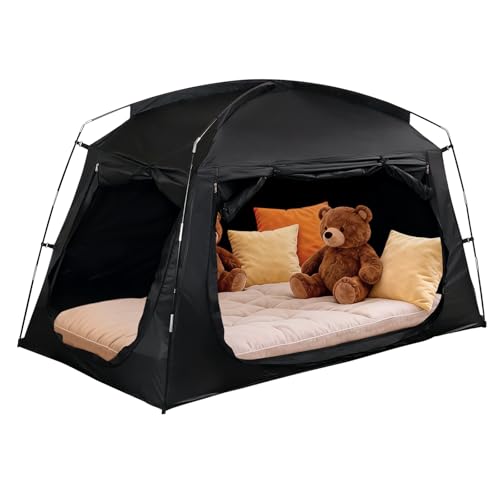
- Roomier twin-size interior for bed or floor use
- Two-sided openings for easier access
- Fast 5-minute setup and lightweight build
Best For: Families wanting a larger, portable sensory space for sleeping or play.
Large Family Bed Fortress
Blackout Bed Tent for Kids and Adults

- Largest space with a rectangular floorless design
- Three doors plus mesh and blackout layers
- Extra pocket, cable opening, and night-light hook
Best For: Shared rooms and bigger beds that need a roomy blackout enclosure.
Light-Blocking Sleep Pod
Alvantor Twin Blackout Privacy Tent

- Blackout fabric helps reduce light.
- Breathable mesh supports airflow.
- Lightweight and easy to carry.
Best For: Kids who need a darker, more private sleep space.
Cozy Kids Retreat
Sumbababy Twin Bed Tent Canopy

- Private nook for bedtime and quiet time.
- Two side windows help with airflow.
- Open-bottom design adds placement flexibility.
Best For: Kids who want a soft, cozy tent for sleep and calm play.
Full Privacy Bed Tent
90% Blackout Portable Privacy Canopy

- 90% blackout supports a darker sleep space.
- Three doors and a side window add flexibility.
- Sturdy fiberglass frame helps with stability.
Best For: Users who want the most enclosed, light-blocking tent.
Quiet Blackout Play Tent
Twin Bed Tent for Kids and Adults

- 99% blackout coverage for a darker sleep space
- Breathable flannel with sturdy pole frame
- Three doors and quick 5-minute setup
Best For: Families wanting a dark, roomy twin bed tent for sleep and play
Easy-Access Privacy Tent
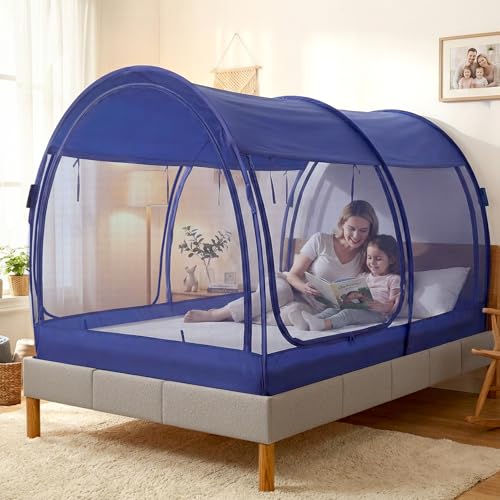
- Sets up in about a minute with pop-up frame
- Four doors and two windows for flexible access
- Breathable pongee and mesh construction
Best For: Buyers who want fast setup and multiple door access in an indoor privacy tent
Sturdy 3-Door Sleep Canopy

- Insert-rod design with 8mm fiber poles for stability
- Three doors with double zippers for easy access
- 93% light reduction with mesh and blackout panels
Best For: Families wanting a sturdier, darker twin bed tent with easy entry
Calm-Down Blackout Tent – Sensory Bed Tent for Kids with Door & Window
If you’re shopping for a bed canopy for autistic child use, this blackout sensory tent is built to create a quiet, enclosed spot for relaxing, reading, or settling down at bedtime. The fully light-proof fabric helps reduce visual stimulation, while the ventilated windows and compact frame make it practical for indoor use.
Best For: Kids who need a dark, private sensory space to calm down and focus.
Pros:
- Fully blackout fabric supports light reduction and light-play activities like UV or projector use
- Designed to help reduce anxiety and improve focus in a calm hideaway space
- Ventilated with windows for indoor comfort and airflow
- Quick setup at about 8 minutes, with a lightweight 3.3 lb build
Cons:
- Size is more limited than full-frame twin bed tents
- Best suited for indoor use only
- Aluminum frame and polyester blend may feel less rigid than larger pole systems
Overall, this is a straightforward choice for families who want a compact, blackout-style sensory nook that can sit on a bed and support calmer routines. Its smaller footprint makes it easy to place in a bedroom without taking over the space.
Twin Sleep Tent – uniHimal Blackout Portable Bed Canopy
This bed canopy for autistic child routines is designed to block unwanted light and distractions, making it easier to create a calm sleep space on a twin bed. The soft fabric, double-sided zippers, and freestanding fiberglass frame make it a practical pick for everyday use in small rooms.
Best For: Twin beds that need a private, quieter sleep environment.
Pros:
- Blackout design helps block light and visual distractions
- Double-sided zippers allow entry from inside or outside
- Soft, skin-friendly fabric with sturdy fiberglass pole support
- Folds into a storage bag for easier transport and storage
Cons:
- Limited to twin size dimensions
- Not water resistant or waterproof
- Can be bulkier than smaller sensory tents
For families wanting a simple blackout sleep tent rather than a play-focused canopy, this model offers a clean balance of comfort and privacy. It’s a sensible fit when the main goal is reducing stimulation at bedtime.
Portable Calming Hideaway – Sensory Bed Tent for Kids
For shoppers comparing a bed canopy for autistic child use, this sensory tent stands out for its larger twin-size layout and quick setup. It creates a dark, private sleep or play area that can work on a bed or on the floor, with breathable openings on both sides for easier access.
Best For: Families wanting a larger, portable sensory space for sleeping or play.
Pros:
- Twin-size design offers a roomier interior
- Can be used on a bed or on the floor
- Two-sided openings make entry and exit more convenient
- Sets up in about 5 minutes and is lightweight to carry
Cons:
- Do not machine wash
- Not waterproof or water resistant
- Polypropylene build may not feel as premium as some polyester options
This is a strong option if you want more usable interior space without losing the calming blackout effect. The fast setup and portable build make it especially useful for everyday sensory routines or temporary quiet corners.
Large Family Bed Fortress – Blackout Bed Tent for Kids and Adults
If you want a bed canopy for autistic child use that also leaves room for siblings or shared quiet time, this larger rectangular tent is the most spacious option here. It combines blackout fabric, multiple doors, and extra storage features to create a flexible private space for sleep, reading, or low-stimulation play.
Best For: Shared rooms and bigger beds that need a roomy blackout enclosure.
Pros:
- Large rectangular design supports more space for sleeping or playing
- Three doors with mesh and blackout layers for flexible access and privacy
- Includes storage pocket, charging cable opening, and night light hook
- Breathable polyester cotton fabric with fiberglass pole stability
Cons:
- Heavier than the smaller kid-focused tents at 7.4 pounds
- Installation requires careful attention to orientation details
- Floorless design may not suit every setup
This is the best fit when space is the priority and you want a tent that can do more than bedtime alone. Its larger footprint and added features make it a versatile choice for families managing shared rooms or active kids.
Light-Blocking Sleep Pod – Alvantor Twin Blackout Privacy Tent
If you’re shopping for a bed canopy for autistic child use, this Alvantor sleep tent is built around privacy, light control, and a calm, enclosed feel. The blackout design helps reduce visual stimulation, while the breathable mesh and dual-entry layout aim to keep the space comfortable for everyday sleep or quiet time.
Best For: Kids who sleep better with less light and a more private, tent-like bed space.
Pros:
- Blackout, dark-colored fabric helps block light for a more restful sleep environment.
- Breathable mesh and dual-entry design support airflow and easier access.
- Lightweight build and carry bag make it easy to set up, store, or move.
- Useful in shared bedrooms, dorms, or other spaces where privacy matters.
Cons:
- Hand wash or machine wash care may still be less convenient than wipe-clean options.
- Not waterproof, so it’s best kept to indoor use.
- Designed as a twin-size sleep tent, so fit is limited to that bed size.
Overall, this is a practical pick if your priority is a darker, more secluded sleep space with simple setup. It focuses more on function than decoration, which can be a plus when you want a calmer bedtime routine.
Cozy Kids Retreat – Sumbababy Twin Bed Tent Canopy
This bed canopy for autistic child routines is a gentle, kid-friendly option for creating a personal sleep nook. The open-bottom twin tent gives children a defined space for bedtime, reading, or quiet play, while the two side windows help balance privacy with airflow.
Best For: Families wanting a soft, enclosed-feeling tent that still feels airy and flexible.
Pros:
- Creates a private sleep space that can help reduce bedtime distractions.
- Roomy interior allows space for resting, reading, or calm play.
- Two side windows help improve ventilation while keeping the tent feel enclosed.
- Open-bottom design can make setup and placement more flexible.
Cons:
- Only intended for indoor use.
- Polyester blend materials may not feel as substantial as heavier-framed options.
- Decorative extras like lights and flags may not be needed for every room.
For families looking to add a comforting sleep corner without making the room feel closed off, this tent strikes a nice balance. It leans into calm, cozy routines and is especially useful when you want one setup for sleep, reading, and quiet time.
Full Privacy Bed Tent – 90% Blackout Portable Privacy Canopy
If you need a bed canopy for autistic child support that prioritizes enclosure and light reduction, this portable privacy tent is the most full-coverage option here. It offers 360-degree privacy, 90% light blocking, and mesh ventilation panels, making it well suited to a more controlled sleep environment.
Best For: Kids, teens, or adults who want a more enclosed sleep tent with strong light blocking.
Pros:
- 90% blackout fabric helps limit light and create a darker rest space.
- Three zipper doors and a side window add access and ventilation options.
- Thickened 9mm fiberglass frame is designed for sturdier support.
- Folds into a carry bag for easier storage and transport.
Cons:
- At 7 pounds, it is heavier than some simpler bed tents.
- Not waterproof, so it’s intended for indoor privacy sleeping use.
- More enclosed design may feel too closed-in for children who prefer open airflow.
This is a strong choice when your main goal is maximum privacy and darker sleeping conditions. The sturdy frame and multiple entry points make it practical, but the more enclosed feel will suit some users better than others.
Quiet Blackout Play Tent – Twin Bed Tent for Kids and Adults
If you’re looking for a bed canopy for autistic child use, this twin bed tent offers a darkened, enclosed sleep space that may help reduce visual distraction at bedtime. It uses breathable flannel fabric, sturdy poles, and a simple twin-size layout, so it can work well as a calm private zone for sleeping or quiet play.
Best For: Families who want a roomy blackout bed tent that doubles as a play space and is easy to set up.
Pros:
- 99% blackout design helps cut down light for a calmer sleep environment
- Breathable flannel fabric is meant to stay ventilated and avoid stuffiness
- Three-door design allows entry and exit from inside or outside
- Sets up in about 5 minutes and includes string lights plus a carry bag
Cons:
- Only fits twin-size beds
- May feel too enclosed for children who prefer a more open sleep setup
- Listed as a tent/play space, so it may take some adjustment for nightly use
Overall, this is a practical choice if you want a soft, private, low-light sleeping area with a play-tent feel. The combination of blackout coverage, breathable material, and quick setup makes it easy to try in a child’s room.
Easy-Access Privacy Tent – LEEDOR Bed Tent Dream Tent
This bed canopy for autistic child routines can be useful when you want a lightweight, enclosed space that reduces light and adds privacy. The LEEDOR tent uses a pop-up frame, four doors, and breathable fabric, making it a flexible option for beds, dorm rooms, or daytime quiet time.
Best For: Shoppers who want the fastest setup and the most entry points in a lightweight indoor bed tent.
Pros:
- Pop-up frame with shock-corded poles sets up in about a minute
- Four zipped doors and two windows make access easier from multiple sides
- Breathable pongee fabric and mesh help with airflow
- Lightweight design and compact carry bag make storage simple
Cons:
- Mattress is not included
- Best suited to twin beds according to the listed dimensions
- Mesh construction may offer less full blackout than heavier fabric tents
For families prioritizing convenience, this is one of the easiest bed tents to live with day to day. The multiple doors and airy build make it especially practical if your child may dislike a single small entry or a heavy, closed-in feel.
Sturdy 3-Door Sleep Canopy – Twin Bed Tent Canopy
If you need a bed canopy for autistic child support that feels stable and private, this twin bed tent focuses on sturdiness and light control. Its insert-rod design and 8mm fiber poles are meant to be more stable than typical pop-up tents, while the three-door layout lets you manage access and brightness with less hassle.
Best For: Families who want a sturdier twin bed tent with strong light reduction and easy storage.
Pros:
- Patent-protected insert-rod design is built for better stability
- Three doors with double zippers improve access from inside or outside
- Mesh plus black sponge fabric helps reduce light by 93%
- Includes a storage bag and folds down for simpler storage
Cons:
- Mattress is not included
- Hand wash only care may be less convenient for some families
- At 8.1 pounds, it is heavier than some other indoor tent options
This model stands out if stability is a top concern and you want a more structured feel than a basic pop-up canopy. The darker fabric panels and practical three-door design make it a strong candidate for a calmer sleep area.
How We Picked the Best Bed Canopy for Autistic Child
We prioritized designs that can help reduce visual stimulation, support routine, and create a defined sleep space without feeling sealed off. For a Bed Canopy for Autistic Child use case, that means looking closely at blackout performance, ventilation, stability, entry/exit convenience, and overall ease of setup.
We also favored options that work for both sleep and calming downtime, since many families want one product that can function as a quiet retreat, not just a bedtime accessory.
Quick Comparison
Most buyers will narrow the list by bed size, desired darkness level, and portability. Pop-up tents are usually the quickest to set up, while canopy-style designs may feel more open and flexible. If the goal is stronger sensory blocking, choose a model with full coverage and limited light gaps. If your child is sensitive to heat or enclosed spaces, prioritize mesh panels and multiple openings.
Key Buying Factors for Bed Canopy for Autistic Child
Blackout Vs. Breathability
Blackout fabric can help reduce stimulation and make naps easier, but airflow matters just as much. Look for a balance of darkening material and mesh windows or vents so the sleeping area stays comfortable.
Space and Access
Consider whether your child prefers a more enclosed cocoon or an open, easy-access layout. Large doors and multiple entry points can reduce frustration, especially for kids who dislike feeling trapped.
Bed Size and Fit
Match the canopy to the mattress size first. A snug fit helps prevent gaps that let in light, while the wrong size can make setup unstable or less effective.
Setup and Portability
If you plan to move the canopy between rooms or use it for travel, lightweight pop-up construction can be a major advantage. For long-term use, sturdier framing may be worth the extra effort.
Cleaning and Daily Use
Families should also think about maintenance. Removable or wipeable materials are helpful when a product will be used every night and possibly for playtime, too.
Who Should Buy Which Bed Canopy for Autistic Child?
If your main goal is maximum sensory reduction, choose a blackout-focused tent with fuller coverage. If your child needs a calmer but less enclosed environment, a breathable canopy with mesh panels may be the better fit. For shared spaces or frequent room changes, portability should be your top priority.
Ultimately, the best Bed Canopy for Autistic Child support is the one your child will actually tolerate and use consistently. Comfort, airflow, and a reassuring sleep routine matter more than any single feature on the box.