Denqir XB-ws-gcj01 Cordless Weed Wacker review time: this 4-in-1 yard tool tries to replace a trimmer, edger, brush cutter, and light mower in one cordless package.
For homeowners who want flexibility more than pro-grade brute force, it makes a compelling case.
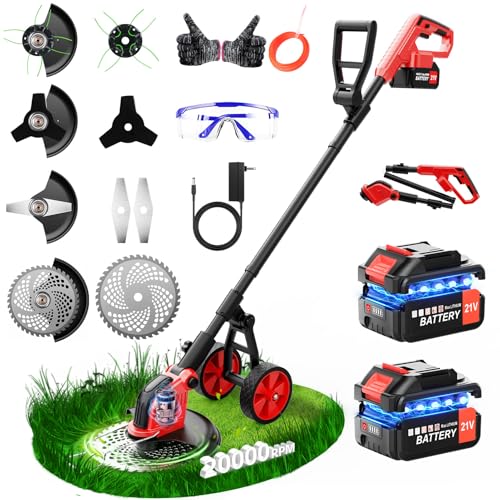
Denqir Weed Wacker Review Summary
If you want a multi-use cordless weed wacker that can handle routine trimming, edging, and occasional heavier yard cleanup, the Denqir XB-ws-gcj01 is built for exactly that job.
It fits best for homeowners with small to medium yards, people who want to avoid gas maintenance, and anyone looking for a tool that can do more than a basic string trimmer.
What stands out most is the combination of an 800W brushless motor, 20,000 RPM cutting speed, two 21V batteries, and a 12-inch cutting width.
The wheel assist and adjustable head also improve usability in ways that matter during real yard work, especially if you are trimming along fences, beds, sidewalks, and uneven edges.
The main tradeoff is that this is still a battery-powered yard tool, not a commercial brush cutter.
It is a smart buy for convenience and versatility, not for nonstop heavy clearing. If that matches your yard, the Denqir XB-ws-gcj01 Cordless Weed Wacker looks like a practical, well-rounded choice.
Scorecard
| Category | Score | What it means |
|---|---|---|
| Cutting power | 8.0/10 | An 800W brushless motor and 20,000 RPM suggest strong cutting ability for routine trimming and tougher overgrowth. |
| Runtime | 8.0/10 | Two 3000mAh batteries are designed for rotation use and the listing indicates extended working time for yard sessions. |
| Versatility | 9.0/10 | The 4-in-1 design covers string trimming, brush cutting, grass trimming, edging, and even light mowing with multiple blade types. |
| Ease of use | 8.0/10 | Wheel support, auxiliary handle, lightweight cordless design, and angle-adjustable head make it easier to maneuver than a basic trimmer. |
| Yard coverage | 8.0/10 | A 12-inch cutting width helps cover more ground per pass, which should speed up work on small to medium yards. |
| Comfort and control | 7.0/10 | The adjustable head and removable wheels improve handling, but the 10.59-pound weight may still feel substantial during longer use. |
| Support and setup | 7.0/10 | The listing highlights customer support and installation tips, but blade swaps and wheel setup may require some initial attention. |
Bottom line: the Denqir XB-ws-gcj01 is best for buyers who want one cordless tool that can do several yard jobs well without stepping up to gas equipment.
Key Features and Specifications of Denqir Weed Wacker
The Denqir XB-ws-gcj01 Cordless Weed Wacker is positioned as a battery-powered, multi-function yard tool for grass trimming, edging, weed cutting, brush cutting, and light mowing.
Here are the core specifications buyers should pay attention to.
| Specification | Details |
|---|---|
| Brand | denqir |
| Model | XB-ws-gcj01 |
| Power source | Battery powered, cordless |
| Motor | 800W brushless motor |
| Speed | Up to 20,000 RPM |
| Cutting width | 12 inches |
| Batteries included | 2 batteries |
| Battery capacity | 2 x 3000mAh |
| Battery voltage | 21V lithium-ion |
| Working time | About 100 minutes combined use claimed; around 50 minutes average battery life noted |
| Weight | 10.59 pounds |
| Dimensions | 17 x 5 inches |
| Blade system | Nylon blade, metal blade, trident blade, saw blade |
| Design | 4-in-1 trimmer, brush cutter, edger, light mower |
| Adjustability | Head angle adjustable from 0° to 90° vertically and 0° to 360° horizontally |
| Extras | Upgraded wheel, auxiliary handle, charger, removable wheels |
| Recommended use | Small to medium yards, light mowing, grass trimming, brush cutting, weed trimming |
These specs tell you a lot about the product’s real-world fit.
The brushless motor is important because it usually supports better efficiency and less maintenance than brushed designs.
The 12-inch cutting width is also useful because it reduces the number of passes needed on regular trimming jobs.
Two batteries are a meaningful advantage for a cordless tool.
Instead of stopping mid-job and waiting for a recharge, you can rotate packs and keep moving.
For buyers with standard suburban yards, that can be the difference between a frustrating half-finished session and a practical one.
Pros and Cons of Denqir Weed Wacker
Here is the straight Denqir XB-ws-gcj01 Cordless Weed Wacker pros and cons breakdown from a buyer’s perspective.
| Pros | Cons |
|---|---|
| Strong 800W brushless motor with high RPM for cordless cutting | Weight may be noticeable during extended handheld use |
| Four blade types improve versatility across different yard tasks | Blade changes and setup may take some learning |
| Two batteries help reduce downtime | Runtime is still limited versus corded or gas models for larger properties |
| Wheel option can reduce fatigue and improve stability | Not ideal for heavy commercial clearing or thick brush fields |
| Wide 12-inch cutting path boosts efficiency | Battery performance will vary with grass density and blade selection |
| Adjustable head helps with edging and awkward angles | Initial assembly matters, especially for the wheel and auxiliary handle |
Best strength: the Denqir XB-ws-gcj01 gives you more flexibility than a standard string trimmer.
Biggest drawback: it is still a cordless consumer tool, so very dense growth can push it toward its limits.
How the 4-in-1 Blade System Works
The biggest selling point is the 4-in-1 cutting concept.
Instead of being locked into a single trimming setup, the Denqir XB-ws-gcj01 Cordless Weed Wacker includes four blade styles: nylon, metal, trident, and saw blade.
That matters because different tasks demand different cutting behavior.
The nylon blade is the most familiar choice for routine grass trimming and lighter edging.
It is usually the gentlest option and the easiest to use around fences, paths, and landscape features.
The metal blade is a step up for tougher weeds and thicker stalks.
The trident blade adds more aggressive cutting engagement, which is helpful when grass becomes overgrown or uneven.
The saw blade is the most specialized option and is best reserved for more demanding brush-like material.
That multi-blade approach is one of the main reasons this product stands out in the cordless category.
Many trimmers can edge, but fewer can switch roles this broadly.
If you only need very light trim work, the extra blades may not matter.
If your yard has a mix of grass, weeds, and occasional scruffier patches, the system becomes much more useful.
Buying tip: use the correct blade for the job.
That improves cutting efficiency, reduces wear, and helps the tool feel more capable than a one-blade trimmer.
Cordless Runtime and Battery Swapping
Runtime is one of the most important buying factors in any cordless yard tool, and the Denqir XB-ws-gcj01 handles it in a practical way.
It includes two 21V 3000mAh batteries, which gives you the ability to swap packs instead of stopping altogether.
The listing points to a combined working time of about 100 minutes, while the average battery life is around 50 minutes.
That kind of runtime is usually enough for routine suburban maintenance, especially if you are trimming weekly rather than letting the yard get badly overgrown.
It is also more manageable for users who dislike dragging cords around obstacles or dealing with gas mixtures and pull starts.
Still, battery tools always depend on conditions.
Thick weeds, aggressive blade selection, and continuous high-load use will shorten run time.
That is why this model makes more sense for small to medium yards than for large rural properties or major brush clearing.
Best case: you trim in sessions, recharge between uses, and take advantage of the spare battery.
Less ideal: you need hour-after-hour nonstop work in dense growth.
Wheel Mode vs Handheld Trimming
The removable wheel design is one of the most interesting usability choices on the Denqir XB-ws-gcj01.
In wheel mode, the tool behaves more like a walk-along trimmer or light mower, which can reduce the strain of keeping the head perfectly controlled for long periods.
For some users, that is a major comfort advantage.
In handheld mode, the tool becomes more like a traditional weed wacker.
This mode is better for fence lines, around trees, tight corners, and sloped areas where wheel support would get in the way.
The auxiliary handle also helps improve leverage and control, especially when using a heavier blade or working at awkward angles.
Because the tool weighs 10.59 pounds, the wheel option is not just a gimmick.
It can genuinely matter if you plan to use the trimmer for more than a few minutes at a time.
That said, wheel mode is only as good as the terrain.
Flat or gently uneven ground will be the sweet spot, while rough, cluttered, or steep terrain may still favor handheld use.
Practical takeaway: the wheel system broadens the tool’s comfort range, but it does not replace all the benefits of a lighter dedicated trimmer.
Design, Comfort, and Ease of Use
From a buyer’s perspective, the Denqir XB-ws-gcj01 looks designed to solve the most common frustrations with basic trimmers.
Cordless operation removes cable management.
The adjustable head helps with edging and reaching under shrubs.
The auxiliary handle improves control.
The wheel attachment reduces fatigue.
Together, those choices make the tool feel more considered than a bare-bones weed eater.
The downside is that added versatility often brings a bit more setup complexity.
The listing includes installation guidance for aligning grooves and attaching the wheel and handle from left to right, which suggests the first assembly may take some attention.
That is not a dealbreaker, but buyers who want a simple grab-and-go tool should expect a short learning curve.
The general comfort profile is solid for the category, but the weight means it is not the lightest option available.
If you are an older buyer or someone who wants easier yard maintenance, the wheel mode can offset that.
If you plan to use it overhead or for extended handheld edging, the mass will be more noticeable.
Design verdict: smart, practical, and feature-rich, but not minimalist.
Best Yard Sizes and Weed Types for This Trimmer
The Denqir XB-ws-gcj01 is best matched to small and medium yards where owners need a tool for mixed maintenance rather than one specialty job.
It should be a good fit if your yard includes ordinary grass edges, sidewalk lines, fence borders, and periodic weed growth between trims.
It is also better suited to soft-to-moderate weeds, light brush, and general overgrowth cleanup than to heavy, woody brush.
The blade variety helps extend its usefulness, but there is still a limit to what a battery-powered consumer trimmer can realistically handle.
If your property gets neglected for long stretches or has thick saplings and dense brush, a gas brush cutter will be the more appropriate option.
For homeowners with tidy lawns who want a fast, adaptable maintenance tool, this model makes a lot more sense.
For larger properties, the battery runtime and handheld weight become more significant tradeoffs.
Alternatives to Consider Before Buying
If you are still comparing options, a few common alternatives are worth considering.
A 40V cordless string trimmer with spare battery may be the better choice if runtime and brand ecosystem matter more than blade versatility.
It is often a cleaner solution for buyers who mainly trim grass and edges.
A lightweight edger with interchangeable heads is another option if your primary concern is sidewalk and driveway finishing rather than brush cutting.
That type of tool can be simpler and lighter, though usually less versatile.
If your yard has truly stubborn growth, a gas brush cutter remains the stronger choice for raw power and longer work sessions.
And if you want uninterrupted runtime for regular maintenance, a corded electric trimmer can be a smart, low-maintenance answer for smaller yards near an outlet.
Compared with these options, the Denqir XB-ws-gcj01 wins on versatility. It loses some points on simplicity and long-session endurance.
Who Should Buy Denqir Weed Wacker?
Buy the Denqir XB-ws-gcj01 Cordless Weed Wacker if you want a flexible, battery-powered yard tool that can take on more than basic trimming.
It is a good fit for:
- Homeowners who want one tool for trimming, edging, brush cutting, and light mowing
- People with small to medium-sized yards
- Users who want to avoid extension cords and gas maintenance
- Buyers who value wheel-assisted support for reduced fatigue
- Anyone who wants a cordless trimmer with multiple blade options
You should probably skip it if:
- You have a large property that requires long, uninterrupted runtime
- You regularly tackle heavy brush, saplings, or commercial-level clearing
- You want the lightest possible handheld trimmer
- You prefer the simplest possible tool with minimal setup and blade changes
Buyer-fit verdict: this is best for the practical homeowner, not the professional landscaper.
Is Denqir Weed Wacker Worth It?
So, is Denqir XB-ws-gcj01 Cordless Weed Wacker worth it?
For the right buyer, yes.
It offers a strong mix of power, battery convenience, and versatility that makes yard work more efficient and less repetitive.
The value comes from how much it can do in one package.
The 800W brushless motor, 20,000 RPM speed, dual batteries, 12-inch cutting width, and 4-in-1 blade system all point to a tool that is trying to replace several separate yard products.
That is exactly what many homeowners want: fewer tools, less storage hassle, and enough performance to keep a regular lawn in shape.
The drawbacks are real, though.
The weight is not trivial, runtime is finite, and the setup process may take a little attention.
If you need rugged, all-day brush clearing, this is not the machine to buy.
If you need a versatile cordless trimmer for routine maintenance, though, the Denqir XB-ws-gcj01 Cordless Weed Wacker is a sensible, buyer-friendly choice.
Final advice: buy it if you want an adaptable, wheel-assisted cordless yard tool for ordinary home use.
Skip it if your property demands heavy-duty clearing or nonstop runtime.